The Anchor That Holds: Finding True Hope in Turbulent Times
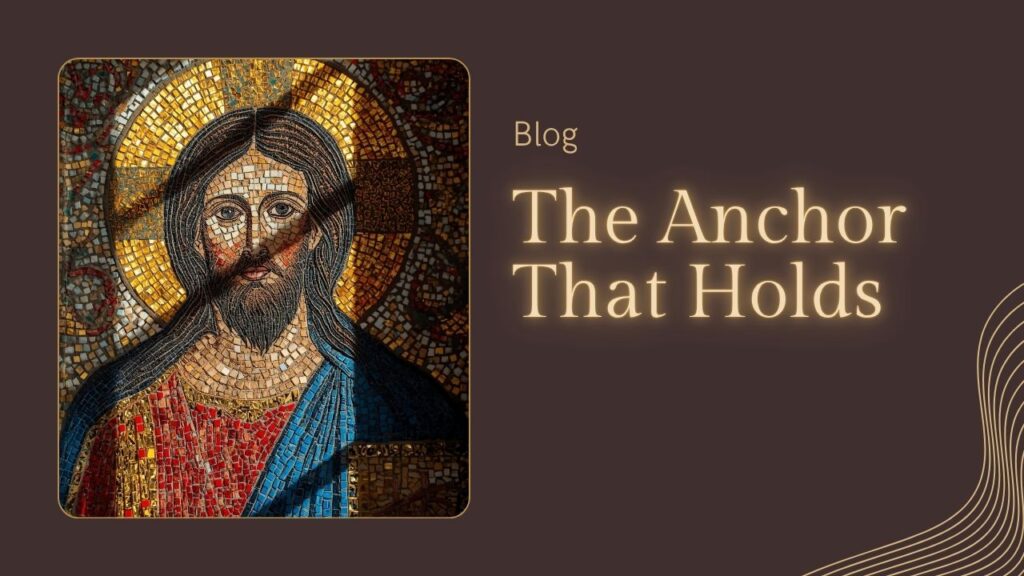
Life has a way of tossing us around like a small boat in a storm. We face waves of doubt, currents of false ideologies, the undertow of our own sinfulness, and the tempests created by a broken world. In these moments, our culture offers us what amounts to a helium balloon—vague platitudes like “keep your chin up” or “things will get better.” But what if real hope looks less like a balloon floating upward and more like an anchor going down?
Actually, what if it’s even better than that?
The Biblical Metaphor of Water and Storms
Scripture consistently uses water imagery to describe the challenges of life. The Psalmist speaks of mountains being thrown into the heart of the sea, waters roaring and foaming—a picture of complete chaos. Paul warns about being tossed around by every cunning wave of doctrine. James describes doubt as being like someone driven and tossed by the wind. Even Jonah’s literal storm was caused by his disobedience, showing how our own poor choices can create chaos that threatens to drown us.
These aren’t just poetic images. They’re vivid descriptions of what life actually feels like. The internal storms of sorrow, where we feel like waves are crashing over us. The external storms of worldly chaos. The disciplinary storms God sometimes sends to get our attention before we drift into greater danger. The storms caused by the sins of others that leave us feeling battered and broken.
Anyone who has been hit by a real ocean wave—picked up and slammed down—knows the terrifying power of water. That’s the biblical picture of life’s challenges. We could really use an anchor.
Hope Rooted in God’s Character
The book of Hebrews offers us exactly that—an anchor for our souls. But this anchor isn’t grounded in wishful thinking or positive psychology. It’s anchored in the unchangeable character of God himself.
Consider the story of Abraham. When God made promises to him, He had no one greater to swear by, so He swore by Himself. Think about that. When you co-sign a loan, you point to someone with greater financial standing. When you make a promise, you invoke something greater than yourself to guarantee it. But who can God point to? No one. He is the uncreated Creator, self-existent, dependent on nothing and no one. He needs no co-signer.
This matters profoundly for our hope. The God we serve isn’t one deity among many, jockeying for position in some cosmic power struggle. He is utterly unique, sovereign, and supreme. When He makes a promise, it’s backed by His own infinite nature.
Four Pillars of Unshakeable Hope
Our hope rests on four unchangeable realities about God:
First, there is no one greater than God. He doesn’t need validation, backup, or support. His promises stand on His own authority.
Second, God desires to bless His people. He didn’t say to Abraham, “Well, I guess I’ll bless you.” He said, “Surely—most certainly—I will bless you and multiply you.” God’s heart is oriented toward pouring out goodness on His children. We’re often tempted to believe the serpent’s lie from the Garden—that God is stingy, holding out on us. But the entire biblical narrative reveals a God who longs to bless.
Third, God cannot lie. Twice He confirmed His promise to Abraham—the initial promise and the oath. In both, it was impossible for God to lie. Sometimes we might wish God would sugarcoat things, pull His punches when confronting our sin. But His truthfulness, though sometimes uncomfortable, is actually a source of hope. We can trust what He says because deception is contrary to His very nature.
Fourth, God is our refuge. Like finding shelter in the cleft of a rock during a sudden downpour, we can run to God for protection from life’s storms. He wants to be the One we sprint toward when adversity strikes.
The Gospel: Where God’s Character Shines Brightest
All of these attributes of God find their fullest expression in Jesus Christ. The God who is unlike anyone else took on human flesh—not just appearing as human, but actually becoming human. The infinite God added humanity to His divinity. There is no other god like this.
Jesus came to bring blessing and life. Everywhere He went, He healed the sick, fed the hungry, and proclaimed the year of the Lord’s favor. He spoke truth with authority—not like someone who had merely read the Bible, but like someone who wrote it.
Then Jesus went to the cross, where every wave, every storm, every bit of sin, doubt, and brokenness was thrown at Him. His body was broken, His blood was shed, His heart crushed—taking the worst this fallen world could offer so He could be our refuge. Every storm that threatens us was poured out on Him.
But the story doesn’t end there. Jesus rose from the grave. We don’t serve a dead religious founder; we serve a living Savior. And after appearing to His disciples, He ascended into heaven itself.
The Anchor That Goes Up
Here’s the beautiful plot twist: our anchor doesn’t just go down—it goes up. Hebrews 6:19 describes our hope as “a sure and steadfast anchor of the soul, a hope that enters into the inner place behind the curtain.” Jesus, our great high priest, has gone into the heavenly Holy of Holies. He’s anchored us not to the ocean floor, but to heaven itself.
We’re not wishing upon a star. We’re connected to the throne room of God. Jesus has run there as our forerunner, and He’s pulling us in. The anchor is firm. The rope is secure.
Patient Waiting
This hope requires patience. Abraham waited years—possibly decades—for God’s promise to be fulfilled. There were times he lost patience and took matters into his own hands, creating messes that reverberate even today. But ultimately, he patiently waited and obtained the promise.
We’re in a similar position, patiently waiting for Jesus to return, to make all things new, to usher in a reality where there are no more storms. When we lose patience, we lose hope and start placing our trust in other things—our jobs, our relationships, our accomplishments, our appearance. All of these will eventually disappoint.
But if we anchor ourselves in Christ alone—in the God who cannot lie, who desires to bless, who is our refuge—our hope will never be dashed.
The world offers flimsy hope. God offers an anchor. Which will you choose?