The Journey to Heaven
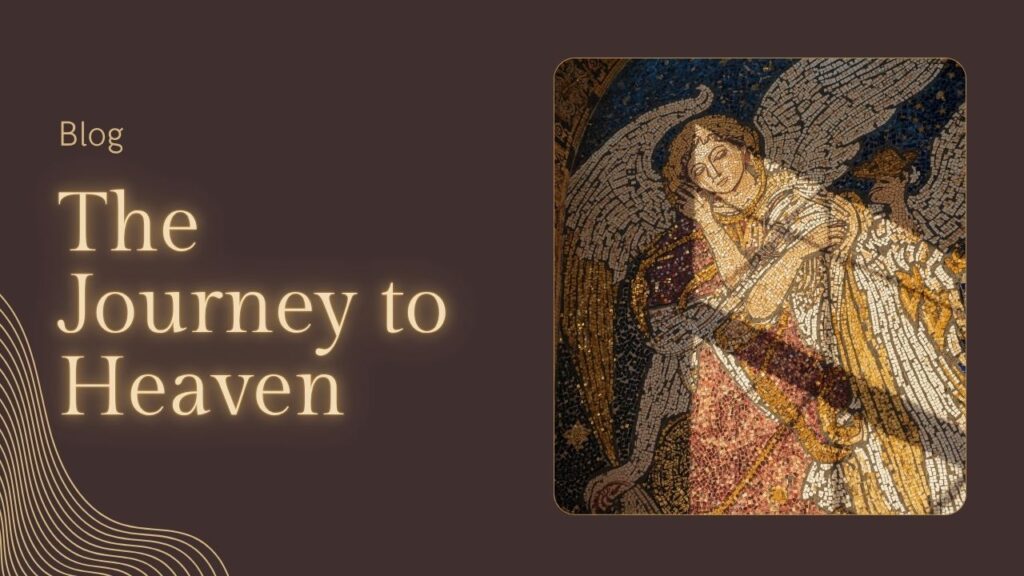
The human heart has always yearned for heaven. Throughout history, countless souls have desperately sought assurance of their eternal destiny, longing to know with certainty that they would find acceptance before a holy God. This universal longing was perhaps never more poignantly illustrated than in the story of a young German monk who, despite his fervent religious devotion, could find no peace.
In 1505, a 21-year-old man joined the Augustinian order, driven by an overwhelming desire to secure his place in heaven and escape the judgment he knew his sins deserved. He followed every rule, performed every ritual, confessed every sin he could remember, and then confessed again. He prayed, he studied, he worked, he fasted. Yet peace eluded him.
When he traveled to Rome, hoping to find spiritual solace at the heart of Christendom, he was devastated by what he encountered. At one church, he climbed 28 ancient steps on his hands and knees, praying an Our Father on each step, believing this act would bring absolution. He reached the top still feeling condemned.
But then something remarkable happened. Through studying the letter to the Romans, he discovered a truth that would change not only his life but the course of history: justification by faith. He learned that “those who by faith are righteous shall live.” The revelation was simple yet profound—salvation and forgiveness come only by the grace of God through the finished work of Christ, not through works of penance, confession, or good deeds.
On October 31, 1517, Martin Luther nailed his 95 Theses to the church door in Wittenberg, Germany, declaring this liberating truth for all to see.
The Seated Savior
The book of Hebrews presents us with a stunning image: we have a high priest who is seated at the right hand of the throne of the majesty in heaven. This detail—that Jesus is seated—is profoundly significant.
In the Old Covenant, priests never sat down. Their work was never finished. Sacrifice after sacrifice, day after day, year after year, the work continued. The high priest entering the holy of holies wouldn’t dare sit down; there wasn’t even a chair to sit on. The only “seat” was the mercy seat on the ark of the covenant, overshadowed by cherubim—the very place where God’s presence dwelled and where the blood of sacrifice was applied. No priest would presume to sit there.
But Jesus sat down. His work is finished, completed, done. As He declared from the cross: “It is finished” (John 19:30). The sacrifice has been made and accepted by the Father, proven by His resurrection from the grave.
Not only is Jesus seated, but He sits at the right hand of God—a position of ultimate honor, power, and authority. In ancient courts, the seat at the king’s right hand was reserved for the most privileged. Jesus occupies this position, where He has the ear of the Father and makes intercession for His people.
There’s another beautiful detail here. In the Jewish Sanhedrin, the high court had a presiding judge with scribes on his left and right. When a verdict of condemnation was rendered, the scribe on the left would record it. But when a verdict of acquittal was given, the scribe on the right would write it down.
Jesus sits at the right hand of the Judge of all ages. For everyone who has trusted in Christ for salvation, His verdict is clear: not guilty.
The Heavenly Throne Room
The throne where Jesus sits is no earthly throne. The book of Revelation gives us a glimpse of its magnificence:
Around this throne sits One whose appearance is like jasper and carnelian, surrounded by a rainbow resembling an emerald. Twenty-four thrones encircle it, occupied by elders in white garments with golden crowns. Lightning flashes and thunder rumbles from the throne. Seven torches of fire burn before it, and a sea of glass like crystal stretches out. Four living creatures, magnificent beyond description, serve as the honor guard.
Day and night, these creatures never cease proclaiming: “Holy, holy, holy is the Lord God Almighty, who was and is and is to come.”
Whenever they give glory to God, the 24 elders fall down in worship, casting their crowns before the throne and declaring: “Worthy are you, our Lord and God, to receive glory and honor and power, for you created all things, and by your will they existed and were created.”
This is where Jesus ministers on our behalf—not in some small earthly temple, but in the throne room of the universe.
A Better Priest with a Better Sacrifice
What makes Jesus a better high priest? He offers better sacrifices and brings better gifts.
The earthly priests brought animal sacrifices to cover sins temporarily. Jesus brought the sacrifice of Himself—once for all, completely sufficient, fully acceptable to God. Unlike the earthly priests who had to offer sacrifices first for their own sins and then for the people’s sins, Jesus had no sin of His own. He offered Himself as the spotless Lamb.
The priests also brought gifts to God—freewill offerings, thanksgiving offerings, worship, and adoration from the people. What gifts does Jesus bring?
First, He presents us as gifts to the Father. Colossians 1:22 tells us that Jesus reconciled us “in his body of flesh by his death, in order to present you holy and blameless and above reproach before him.” We, the redeemed, are the gifts Jesus presents back to God—cleansed, sanctified, made acceptable.
Second, our worship, our prayers of thanksgiving, our adoration—all of these are presented by Jesus as gifts to the Father.
The Shadow and the Substance
The earthly tabernacle and temple were copies and shadows of heavenly realities. When Moses built the tabernacle, God instructed him: “See that you make everything according to the pattern that was shown you on the mountain” (Hebrews 8:5).
The earthly sanctuary was always meant to point beyond itself. It was God’s way of saying, “I want to dwell with my people.” From Eden, where God walked with humanity in the cool of the day, through the tabernacle where His glory filled the tent, to the temple where His presence dwelt—God has always desired to be with us.
But which is better—the shadow or the substance? When you see someone’s shadow, you don’t stop to admire it; you run to embrace the person. The earthly priests ministered at a shadow. Jesus ministers at the substance—the true heavenly sanctuary.
The Promise of Heaven
Jesus made an incredible promise: “In my Father’s house are many rooms. If it were not so, would I have told you that I go to prepare a place for you? And if I go and prepare a place for you, I will come again and will take you to myself, that where I am, you may be also” (John 14:2-3).
Jesus, the second person of the Trinity, is preparing a place for us. Meanwhile, the Holy Spirit who indwells believers is preparing us for that place.
What awaits us in heaven?
Resurrection bodies—not weak but glorious, not perishable but imperishable, not made in humanity but made in glory (1 Corinthians 15).
A place in the Father’s house—in the very presence of God Himself.
A seat at the Son’s table—participating in the great wedding feast.
Heavenly worship—joining the eternal chorus of praise around the throne.
Fulfilled purpose—finally becoming everything we were created to be, fulfilling the purpose for which we were made before sin entered the world.
Freedom—Revelation 21:4 promises: “He will wipe away every tear from their eyes, and death shall be no more, neither shall there be mourning, nor crying, nor pain anymore, for the former things have passed away.”
Freedom from physical pain. Freedom from emotional pain. Freedom from spiritual pain. Freedom from sin itself. The restoration of all things.
Heaven Starts Now
Here’s the beautiful truth: while heaven will be perfected when Jesus returns and establishes His kingdom in fullness, aspects of heaven can begin right now.
Worship, though it will be perfect then, can start today. Will Jesus be the one you prize most, the one you adore, the one you bring your time and resources to? Will your longing for heaven be not merely an escape from hell, but a genuine desire to be in the presence of God and Jesus Christ?
Freedom, though perfect then, can start now. You can experience freedom from addictions, from sin, from enslavement to darkness, because Jesus has made a way.
Purpose, though ultimate in heaven, can begin here. We are made in God’s image, created to reflect His glory, character, ways, and purposes.
The journey that Martin Luther embarked upon—seeking heaven, seeking peace with God, seeking assurance of salvation—ended not in exhausting religious performance but in the simple yet profound truth of grace. Salvation comes through faith in Jesus Christ alone.
There is no other name under heaven given among men by which we must be saved. Jesus gives us heaven—not because we’ve earned it, not because we’re good enough, but because He is good enough. His work is finished. His sacrifice is sufficient. His verdict is final: not guilty.
The question is: will you receive this gift?